Your Brand Portfolio Isn’t Complicated. Your Brand Architecture Is.

How Growing Organizations Can Structure Brands, Sub-Brands, and Offerings for Clarity and Growth
Growth has a way of making a brand more complicated than it needs to be.
A company launches a new product. A new market opens. An acquisition brings another name into the portfolio. A legacy brand has equity leadership doesn’t want to lose.
Before long, the organization has a collection of brands, sub-brands, products, and naming conventions that made sense individually but no longer make sense together.
So leadership asks: Should we create another brand?
It is usually the wrong question.
The better question is: What role should each brand play in the portfolio?
Brand architecture answers that question by defining how brands relate, how they are named, and how customers understand those relationships.
Without a clear architecture, growth creates confusion. With one, growth creates leverage.
What is Brand Architecture?
Brand architecture is the strategic framework that defines the relationship between brands within an organization. Common models include:
- Branded House: One master brand leads products and services.
- House of Brands: Distinct brands operate independently.
- Endorsed Brand Model: Individual brands maintain distinct identities while receiving credibility from a parent brand.
- Hybrid Model: Different relationships exist across the portfolio.
None is inherently better. The right model depends on the organization’s business goals.
The mistake is allowing the architecture to emerge accidentally.
A strong branding agency should help make that strategic decision before jumping into names, logos, or visual systems.
How to Know if You Need a New Brand
A new offering may feel different without needing its own identity.
Before creating another brand, ask:
01. Is the Audience Meaningfully Different?
Does it serve a fundamentally different customer?
02. Is the Value Proposition Meaningfully Different?
Does it make a distinct market promise?
03. Does it Have its Own Growth Trajectory?
Will it require independent investment or expansion?
04. Would Separation Create Market Leverage?
Does a new brand create strategic value?
05. Can the Organization Support It?
Every new brand creates ongoing marketing, digital, and operational requirements.
If the answer to most of these is no, another brand may create more complexity than value.
The goal isn’t more brands. It’s the right relationships between the brands you already have.
Brand Architecture is a Business Strategy
Brand architecture is often treated as a design exercise: Which logo goes where? Should a sub-brand have its own identity? Those questions matter, but they come later.
Architecture should first clarify:
- Where should we invest?
- Which brands should grow, consolidate, or retire?
- Where can we create shared equity?
- Which brands need independence?
- Where does the parent brand create credibility?
This is why brand strategy belongs upstream of identity design.
Whether you’re working with a brand marketing firm, an internal team, or a brand marketing agency MN organizations turn to for specialized expertise, the work should begin with the business problem, not the visual solution.
How to Build a Brand Architecture Framework
A useful brand architecture framework should help leadership make decisions across four dimensions:
01. Business Role
What does each brand contribute to growth?
02. Audience
Who is each brand designed to serve?
03. Equity
Where does customer trust and recognition live?
04. Future Potential
Can the architecture accommodate where the organization is going?
The strongest architecture isn’t the one that makes today’s organization look tidy.
It’s the one that gives tomorrow’s organization room to grow.
The Cost of a Fragmented Brand Portfolio
A fragmented architecture creates more than a brand problem.
Organizations may duplicate marketing investment, content, digital experiences, guidelines, sales materials, customer acquisition, and internal resources. Customers experience that fragmentation too.
Brand equity gets distributed across too many names. Marketing spends time explaining relationships instead of communicating value.
More brands can mean less brand.
Case Study: Building a Brand for What’s Next
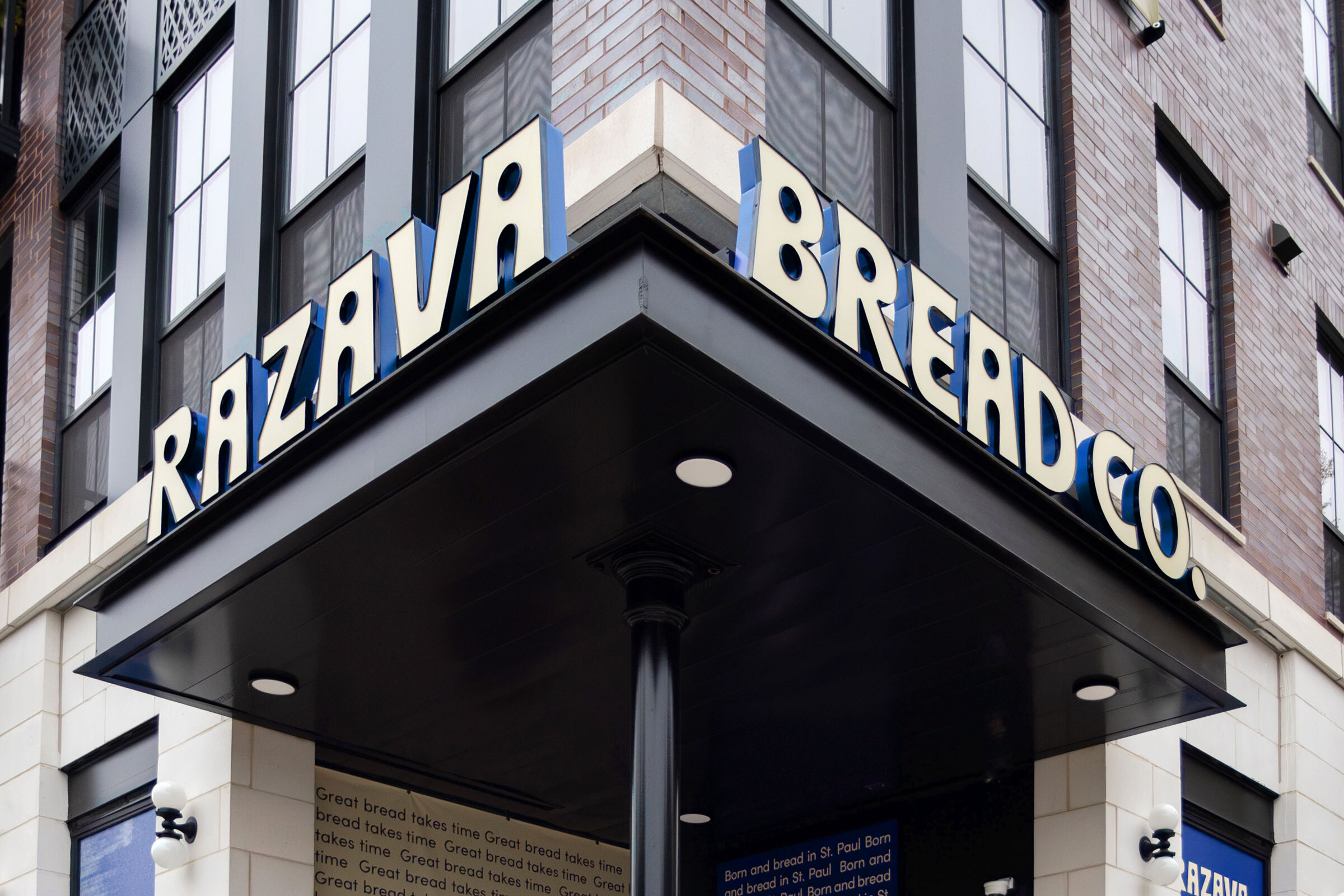
Razava Bread Co. came to Fellow with an opportunity to establish a distinctive brand that could support the business as it grew.
The challenge wasn’t simply creating an identity that looked different. It was building a brand foundation that could create consistency across the customer experience while giving the business room to evolve.
Fellow connected the brand strategy to the identity, creating a system designed to work beyond the initial launch.
The takeaway: A brand needs to be built for the business it is becoming, not just the business it is today.
Good architecture doesn’t limit growth. It gives growth somewhere to go.
5 Signs Your Brand Architecture Needs to Evolve
01. Customers Don’t Understand How Your Brands Connect
02. You’re Launching Brands Faster Than You Can Manage Them
03. Your Brands Compete With Each Other
04. Every New Offering Requires a New Identity
05. Your Corporate Brand isn’t Getting Credit for the Value it Creates
These aren’t necessarily signs that a brand needs to be consolidated. They’re signs that the relationship between brands needs to be reconsidered.
When to Work With a Branding Agency
Brand architecture becomes especially important during a merger or acquisition, portfolio expansion, repositioning, major launch, new category, or shift in business strategy.
The most valuable work happens before naming and identity decisions are made.
A strong partner connects:
Business Strategy → Brand Architecture → Positioning → Naming → Identity → Experience
When those pieces are connected, organizations create brand systems, not disconnected brands.
For organizations evaluating branding companies Minneapolis has to offer, look for a partner that can connect business strategy to brand structure, expression, and experience.
How to Choose a Design Agency in Minneapolis
The same principle applies when evaluating a design agency Minneapolis organizations can turn to.
Don’t just ask who creates the best-looking brands. Ask:
- Do they understand the business problem?
- Can they connect brand strategy to business strategy?
- Can they navigate complex portfolios?
- Do they know when brands should connect or differentiate?
- Can they create an architecture the organization can actually use?
For organizations considering a Minnesota branding agency, strategic capability matters just as much as creative execution.
Build Your Brand Architecture Before Your Brand
The strongest brand portfolios aren’t necessarily the ones with the fewest brands. They’re the ones where every brand has a clear job.
The strategic question isn’t: How many brands should we have?
It’s: What should each brand do for the business?
Brand architecture helps organizations allocate investment, organize customer experience, build enterprise equity, and create clarity as they grow.
They don’t let the portfolio grow by accident. They architect it for what’s next.
Ready to Audit Your Brand Portfolio?
Identify where your brands create value, where they create unnecessary complexity, and where your architecture may be holding back growth. Talk with Fellow about building a brand structure designed for what’s next.
At Fellow, we help organizations build brand systems designed to support long-term growth.
Because a growing organization doesn’t need more brands.
It needs a brand structure that makes growth easier.