The Future Doesn’t Care About Your Industry Category

Why Health, Hospitality, and Wellness Are No Longer Separate Categories
The Post-Optimization Era
A change is occurring in the market. Over the last decade, enterprise brands have relied on a specific playbook: efficiency, optimization, premium signaling, and tech-driven minimalism.
That aesthetic isn’t working anymore. It now feels emotionally vacant to the modern consumer. The market has passed peak optimization.
Sophisticated consumers are no longer buying isolated, transactional efficiency; they are actively seeking integration.
Buyers are rejecting brands that treat them like a data point to be optimized, turning instead toward organizations that command a deeper sense of an intentional, lived experience.
“This is new consumer behavior,” said Karl Wolf, Co-Founder of Fellow. “The brands commanding the highest loyalty and margin right now are those that understand how to build physical and emotional texture into their ecosystems.”
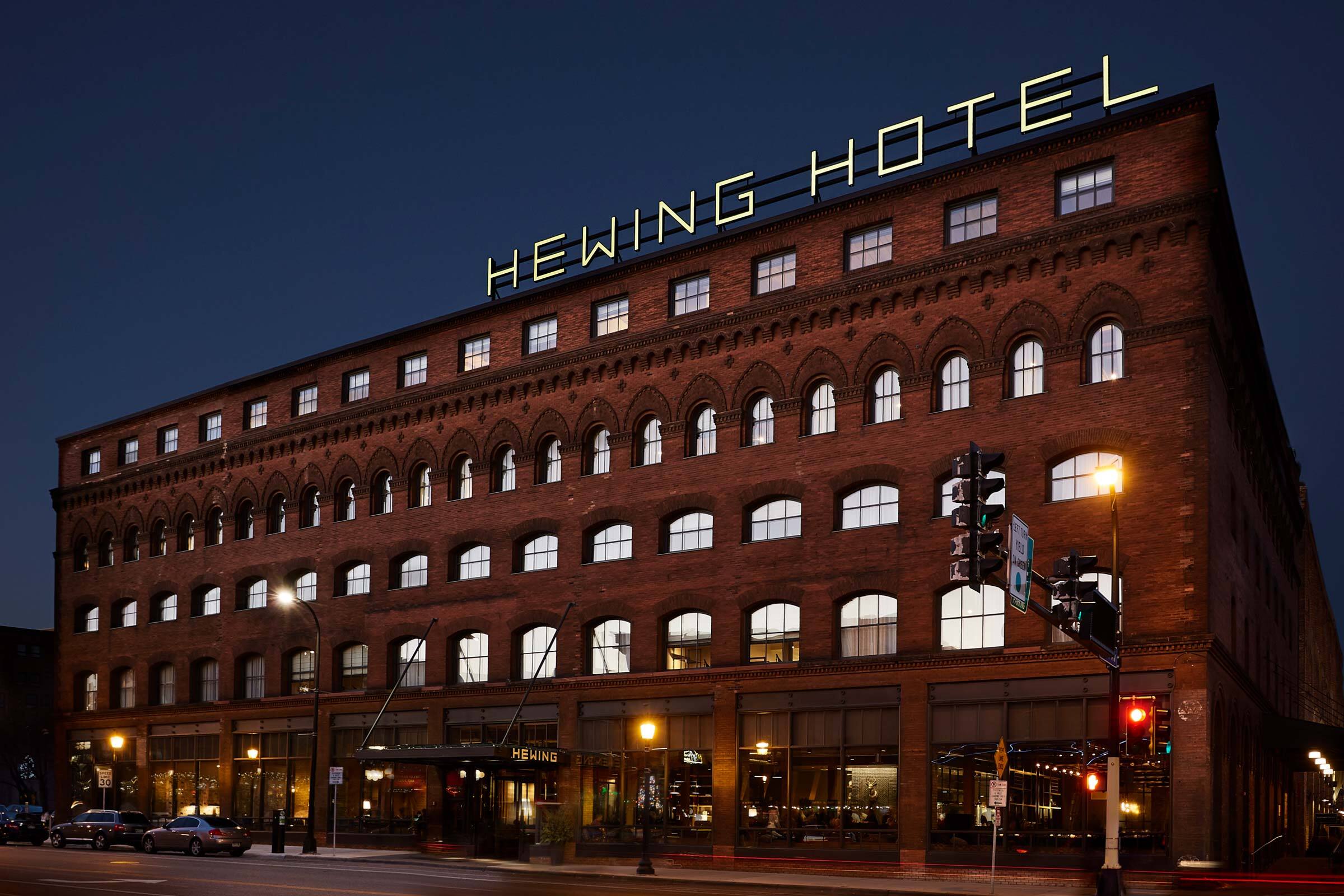
When analyzing this evolution, the hospitality sector offers the clearest evidence. Look at the structural philosophies guiding properties such as the Hewing Hotel and the Surety Hotel. These spaces deliberately reject the generic, sterile luxury of global hotel chains. Instead, they leverage curated texture, architectural intelligence, and localized narrative to create a sense of place that feels discovered rather than advertised. They prove that true premium positioning comes from quiet, contextual depth, not loud, repetitive branding.
This expectation has stretched the traditional boundaries of travel and hospitality, altering asset classes that were historically treated as commodities.
In modern real estate developments like The Bookmatch Apartments and North Loop Green, we see the exact same cultural forces at play. The legacy corporate approach to real estate treats a building as a physical asset to be optimized for maximum density. Now, the future of the market belongs to developers who view real estate as a dynamic, interconnected lifestyle community. By integrating hospitality-driven narrative, intuitive service, and communal texture directly into the physical infrastructure, these developments transform a passive structure into a premium experience.
The signal we are seeing: across every vertical, consumers no longer separate the physical environments they inhabit from the emotional experiences they demand.

Industry Boundaries Are Getting Harder to See
For generations, corporate growth was bound by neatly defined industry sectors. You were a real estate developer, a healthcare provider, a financial institution, or a hospitality group. Security lies in mastering your specific vertical market.
Today, those structural boundaries are dissolving. We have entered a period of systemic category collapse due to changing expectations. Legacy business classifications are failing because modern consumer expectations are fluid.
When categories collapse, your most dangerous competitors are agile, sophisticated operators from adjacent fields, armed with a modern understanding of customer intimacy and experiential design.
To survive this shift, an enterprise cannot simply rely on traditional transactional metrics; it requires a comprehensive brand repositioning strategy that acknowledges where industry lines are permanently blurring.
Consider the realignment occurring at the intersection of healthcare and hospitality. Historically, healthcare marketing focused on metrics: clinical data, technology, and regional geographic proximity. But the modern consumer wants a genuine connection.
When observing the success of a next-generation healthcare delivery network like Harbor Health, the strategy is clear. They didn’t build a traditional hospital system; they co-created an open, inviting consumer health experience designed to dismantle historical industry friction. By creating a healthcare marketing strategy centered on intuitive, personalized care teams, they transformed a complex, clinical service into a high-trust partnership.
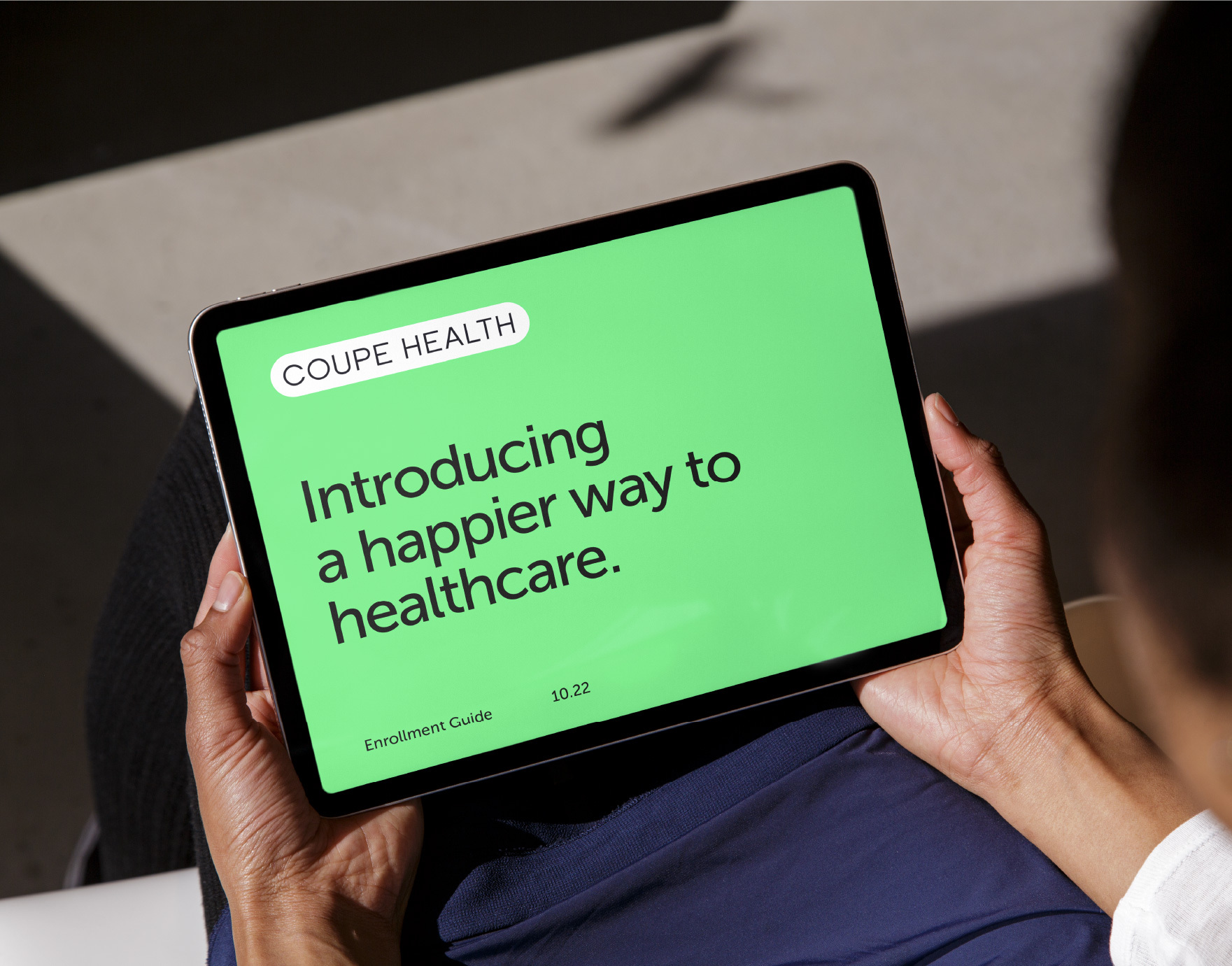
Similarly, the rise of an innovative, national health plan alternative like Coupe Health illustrates that simplicity and transparency are the ultimate competitive differentiators. By designing an app-centered, streamlined experience that eliminates the traditional sticker shock of medical billing, they placed the consumer firmly in the driver’s seat.
These transformations treat care delivery as an integrated consumer touchpoint, which is an important step as healthcare brands are competing against the service standards set by premier hospitality and technology experiences.
We see this same structural dissolution rewriting the rules of the built environment. Consider how real estate developers have historically approached the 55+ demographic. The legacy paradigm viewed this sector through a clinical, institutional lens: build senior living facilities focused on levels of care.
The execution of a national brand ecosystem like Avidor Living disrupted the old category logic. The challenge was to create a lifestyle community tailored to a modern 55+ demographic that is not interested in traditional aging stereotypes. By introducing a sophisticated, youthful category of 55+ active living, Avidor built a scalable national apartment brand that blends high-end hospitality infrastructure with a vibrant social fabric. It treats longevity as an active, aspirational lifestyle asset class rather than an institutional final step.
“This is the reality of modern business transformation,” said Eric Luoma, Co-Founder of Fellow. “The market no longer allows you to isolate health from hospitality, or wellness from real estate. The old classifications are gone.”
If your business model relies on traditional industry boundaries, you may be executing a strategy for a market that no longer exists.
True market leadership belongs to the organizations capable of translating these cultural shifts into unified, believable brand ecosystems.

Business Transformation Before the Squeeze
Category collapse from changing buyer expectations is a high-stakes operational pressure test. It manifests when an enterprise hits specific scaling boundaries, moments where the legacy brand strategy and old operational models can no longer bear the weight of future growth.
Whether a business is navigating complex post-acquisition integration, transitioning from a founder-led identity to a global institutional footprint, or executing a comprehensive corporate repositioning strategy prior to an IPO or major capital raise, the diagnostic remains identical: what got you here will actively prevent you from getting there.
The trap for many mid-market and enterprise organizations is complacency. When a legacy business model is still generating predictable revenue, leadership teams naturally hesitate to disrupt their historical momentum. They treat brand evolution as a secondary aesthetic concern.
A true business transformation strategy isn’t about updating a logo or refreshing a website; it is about realigning the organization’s internal culture, operational narrative, and market footprint before market pressures force your hand.
Waiting until declining margins or aggressive, adjacent competitors squeeze your market share is a mistake that you can’t undo. Ambitious organizations need the strategic foresight to reinvent themselves from a position of strength.
We see this inflection point play out across enterprise heavyweights. Consider the structural evolution required by an organization like The Horton Group. As a powerhouse insurance and risk advisory firm, their growth eventually outpaced standard, transactional market perceptions. To scale beyond regional boundaries and command an elite enterprise footprint, they needed to transform how their internal teams and global clients perceived their value. They had to step out of the commoditized “insurance broker” box and embody the stature of a strategic consultancy.
A similar operational shift occurs during rapid corporate scaling and market realignments. When Salo, a respected talent firm specializing in finance and HR consulting, grew to a national scale, their legacy identity faced an inflection point. To sustain compounding market acceleration and position themselves for acquisition, they had to modernize their brand narrative to reflect a sophisticated, national consulting presence. They had to translate decades of culture and execution into a unified corporate asset for institutional buyers.
This pattern extends into massive, infrastructure-heavy regional giants like Midco. As a leading provider of internet, data, and managed services across the Midwest, they operate in a category defined by rapid technical disruption and collapsing consumer lines. For Midco, modernizing legacy perception required an internal and external realignment with the future digital consumer. It means shifting from an infrastructure provider to a dynamic, forward-looking platform company before market disruption makes legacy models obsolete.
These organizations show that true corporate evolution must be an intentional, operational pivot.
The companies that win tomorrow view business transformation as a proactive strategic necessity built during their most profitable years.

Why Strategy Decks Fail
The market is saturated with high-level diagnostic intelligence. Every tier-one global consultancy can hand an executive a beautifully bound, multi-million-dollar strategy deck that accurately identifies market shifts and category collapse.
Yet, the vast majority of these corporate repositioning efforts still fail. They don’t fail due to a lack of strategic vision; they fail because they lack operational realism. They collapse in the gap between strategic intent and day-to-day execution.
True business transformation requires a rare dual fluency: the intellectual sharpness to interpret where culture is moving, and the raw operational grit to stay embedded inside complex corporate structures to build the actual executable systems.
Without cross-platform alignment across leadership, digital infrastructure, brand narrative, and internal employee experience, a transformation strategy is just expensive shelfware.
The real competitive advantage belongs to partners who understand that you cannot hand a company a future deck. You must help them actively become it.
We see this operational moat demonstrated when an organization scales from a pure utility to a philosophical market leader. Consider Midion, an industry-leading performance and operations consultancy for the built environment. They didn’t need another abstract process framework. To scale their pipeline 6x in just three months, they required a meticulous brand-led marketing deployment that translated their complex, highly technical commitment management methodology into a polished digital reality. The strategy only became believable once it was operationalized across their entire website, collateral, and automated marketing infrastructure.
A similar execution challenge exists when building a completely new consumer ecosystem from scratch. For a project like Outbound Hotels, the ambition wasn’t merely to launch a boutique hospitality brand, but to design an entire catalyst for adventure. Operationalizing a vision across multiple physical geographic regions requires cross-platform alignment. Every digital touchpoint, on-property physical environment, and localized brand asset must work in unison to turn an abstract hospitality concept into a high-margin consumer reality.
This demand for execution fluency is magnified when breathing new life into a stagnant asset class. The transformation of Leijona, unlocking the immense growth potential of a former historic jail and converting it into luxury real estate, a powerful narrative and positioning. A project like this fails if the high-level design vision disconnects from reality. True transformation meant aligning historic preservation constraints, hospitality operations, and premium experiential design into a singular destination brand.
This is the competitive differentiator. It is the understanding that a brand is not a coat of paint applied at the end of a project; it is the fundamental infrastructure of the business itself. Consultancies that vanish the moment the deck is delivered leave companies stranded in transition.
The future belongs to the embedded partners who possess the execution fluency to translate ambition into permanent, operationalized corporate gravity.

Becoming Believable
You cannot advertise your way out of changing buyer expectations.
When the boundaries of your industry dissolve, and consumer expectations undergo a permanent, generational rewiring, the traditional marketing levers—louder campaigns, higher ad spend, or reactionary rebrands—will no longer protect your market share. In the post-optimization era, modern enterprise buyers and consumers possess an explicit radar for empty corporate theater. They easily distinguish between an organization wearing a shallow aesthetic of the future and one that has fundamentally operationalized it.
True transformation is not cosmetic; it is structural. It requires an absolute alignment of your macro-level market thesis and your ground-floor operational reality. Your internal leadership alignment, digital platforms, physical spaces, and employee experience must all tell the exact same story. If there is a disconnect between your strategic narrative and your system execution, your brand becomes unbelievable.
The choice facing ambitious leaders today is stark: you can proactively steer your organization through these inflection points while operating from a position of maximum strength, or you can wait until market forces squeeze your margins and dictate your terms.
The future does not belong to the loudest voice in the room, nor does it belong to the team with the heaviest strategy deck. It belongs to the select few organizations capable of translating cultural interpretation into permanent corporate gravity.